Prospect Heights Multifamily Investment Signals Explained
April 2, 2026
April 2, 2026
If you are looking at Prospect Heights multifamily, the headline numbers only tell part of the story. This is a neighborhood where strong renter demand, older building stock, historic context, and corridor-level redevelopment all meet in the same underwriting. If you want to read the investment signals clearly, you need to look at basis, vacancy, capex risk, and future supply together. Let’s dive in.
Prospect Heights sits within Brooklyn Community District 8, which includes Prospect Heights, North Crown Heights, and Weeksville, according to Brooklyn Community Board 8. For many public housing and market datasets, that broader district is the closest neighborhood-level proxy available, so it is the best way to track local trends with consistency.
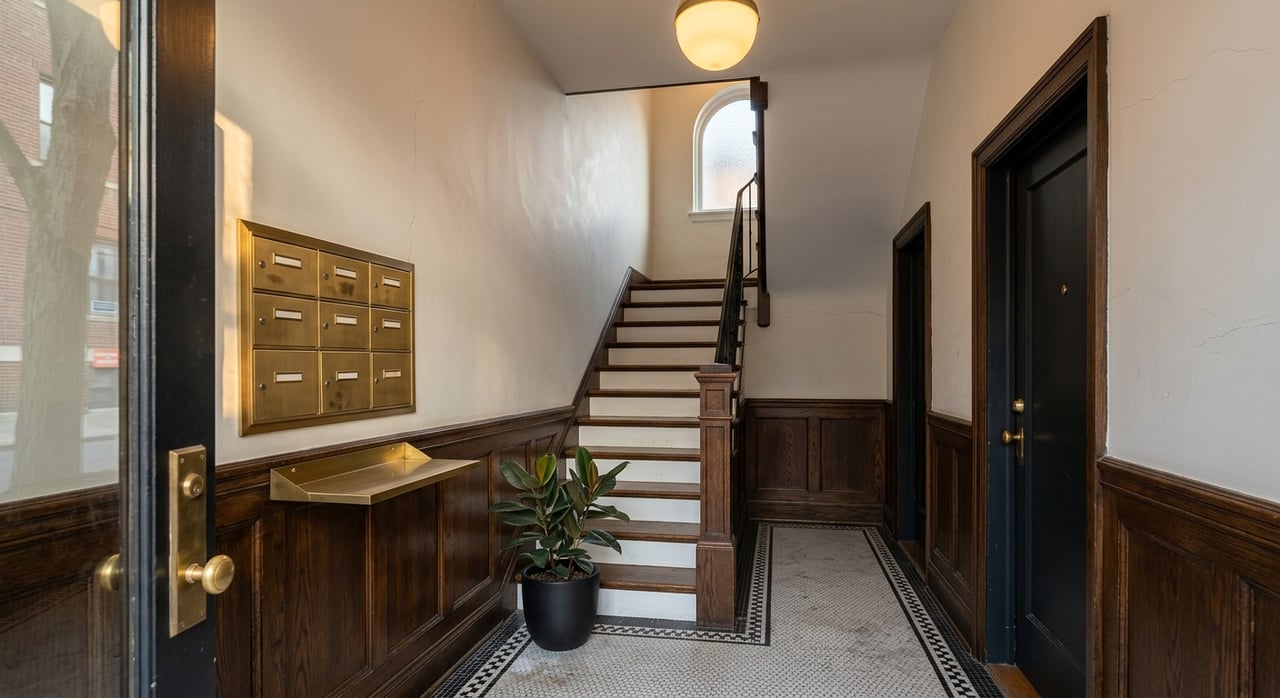
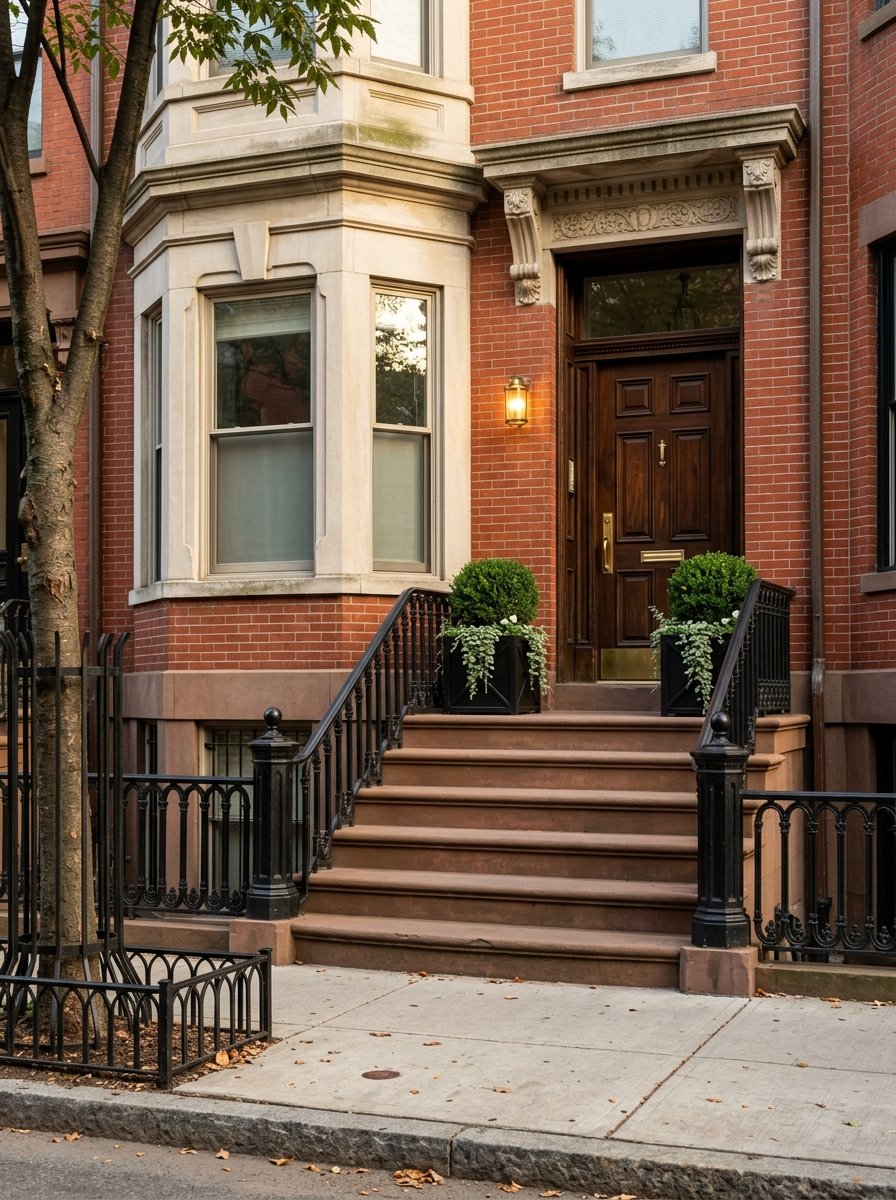
The built environment helps explain why this submarket draws investor attention. The city’s historic district materials describe a neighborhood fabric shaped by row houses, apartment buildings, and four-story walkups, with mixed-use buildings along corridors like Vanderbilt Avenue and Flatbush Avenue, according to the New York City Planning Commission. In practical terms, that means many opportunities are in prewar small multifamily and mixed-use assets rather than large elevator buildings.
If you are underwriting Prospect Heights, the physical character of the housing stock matters as much as the rent roll. Historic-district zoning includes R8X, R7A, and R6B areas, and the city notes that development rights cannot be transferred from structures inside the historic district, according to the City Planning Commission report.
That shapes what “value-add” usually means here. In many cases, the realistic play is improving an existing walk-up, townhouse-style multifamily, or mixed-use building within its current envelope. More aggressive redevelopment assumptions tend to fit better on corridor locations outside the historic core.
The demand story in Crown Heights and Prospect Heights is strong enough to keep investors interested. In 2023, the area had an estimated population of 107,301, median household income of $94,980, and renter median household income of $87,400, according to the Furman Center neighborhood profile. Those figures support a broad renter base, even if affordability pressure remains part of the market.
Household structure also matters for leasing strategy. The same Furman Center data shows that 38.8% of households were single-person households, while 20.6% had children under 18. That mix suggests continued demand across smaller units and family-oriented layouts, depending on the product and block.
Transit access adds another layer of support. In 2023, 81.6% of commuters in the area were car-free, and mean travel time to work was 41.5 minutes, according to the Furman Center. Prospect Heights also benefits from the Atlantic Avenue and Barclays Center transit hub, which the MTA identifies as directly connected to subway, bus, and Long Island Rail Road service.
Low vacancy is one of the clearest positive signals in this market. The rental vacancy rate for Crown Heights and Prospect Heights was 2.7% in 2023, according to the Furman Center. That is still a tight leasing environment, even though it sits above the citywide 2023 net rental vacancy rate of 1.41% reported in the New York City Housing and Vacancy Survey.
For investors, that distinction matters. A 2.7% vacancy rate supports stable demand, but it also suggests you should avoid treating every unit type or every building condition profile as equally easy to lease. In older stock, execution still matters.
Rent levels show both opportunity and restraint. In 2023, median gross rent for all apartments in the neighborhood was $2,140, up from $1,300 in 2006, while recent movers paid a median gross rent of $2,680, according to the Furman Center neighborhood data.
The rent bands also help frame unit-level strategy. The largest rent bands were $1,000 to $1,500 for studios, $1,500 to $2,000 for one-bedrooms, $1,500 to $2,000 for two-bedrooms, and $3,000 to $4,000 for three-bedrooms, based on the same source. That suggests larger units can still capture meaningful pricing power, but investors should underwrite based on actual layout, condition, and legal occupancy rather than broad assumptions.
Prospect Heights can reward careful operators, but older buildings bring real operating risk. In 2023, the neighborhood recorded 153 serious housing code violations per 1,000 privately owned rental units and 516.8 total housing code violations per 1,000 privately owned rental units, according to the Furman Center.
That is an important signal for buyers of prewar walk-ups and mixed-use assets. If a deal only works with minimal repair assumptions, the underwriting may be too optimistic. In this submarket, capex planning and compliance review deserve as much attention as rent growth.
On the sales side, Prospect Heights and Crown Heights BK08 posted a 2024 median sales price per unit of $681,860 for 2-4 family buildings and $253,330 for 5+ family buildings, according to the Furman Center. For most small multifamily investors, the 2-4 family figure is the more relevant benchmark because it better matches the neighborhood’s core tradable stock.
What makes this more interesting is the relative value story. Nearby submarkets posted much higher 2024 median sales prices per unit for 2-4 family buildings, including $1,047,920 in Park Slope and Carroll Gardens, $1,196,250 in Fort Greene and Brooklyn Heights, and $811,670 in Greenpoint and Williamsburg, according to the Furman Center’s neighborhood comparisons. That does not make Prospect Heights “cheap,” but it does support its position as a lower-basis alternative to several prime Brooklyn peers.
The discount to nearby neighborhoods should not be read as a simple upside story. Prospect Heights also posts lower median gross rent than some nearby premium submarkets. In 2023, median gross rent was $2,140 here, compared with $2,780 in Park Slope and Carroll Gardens, $3,080 in Fort Greene and Brooklyn Heights, and $2,570 in Greenpoint and Williamsburg, according to the Furman Center.
Income levels tell a similar story. Median household income in Crown Heights and Prospect Heights was $94,980 in 2023, below Greenpoint and Williamsburg, Fort Greene and Brooklyn Heights, and Park Slope and Carroll Gardens, based on the Furman Center data. So the investment thesis is not simply “buy below Park Slope and wait.” It is better understood as a middle-premium market where strong fundamentals still need disciplined basis and realistic rent assumptions.
Supply growth is already part of the neighborhood story. Between 2010 and 2024, Crown Heights and Prospect Heights added 5,751 units in buildings with four or more units, with 70% market-rate and 14% income-targeted, according to the Furman Center. The same data also shows 521 subsidized properties in 2024 and 44 subsidized properties eligible to expire between 2025 and 2030.
The most important corridor-level signal is the Atlantic Avenue Mixed-Use Plan. The Mayor’s Office states that the plan would create nearly 4,600 new homes, including about 1,055 permanently affordable homes through Mandatory Inclusionary Housing, plus more than 380 affordable homes on city-owned or controlled sites in Crown Heights and Prospect Heights.
For investors, that pipeline does not cancel the neighborhood’s appeal. It does mean that assets near Atlantic Avenue should be underwritten with an eye toward future competition, shifting streetscapes, and a broader move from low-rise industrial and storage uses toward mixed-use housing and commercial space.
Not every Prospect Heights building should be read the same way. The historic core tends to favor a “value-add within the envelope” approach because of its built form and zoning context, while Atlantic Avenue edge locations may carry more redevelopment flexibility, as reflected in the City Planning Commission’s Atlantic Avenue rezoning materials.
That distinction matters when you compare two seemingly similar deals. A townhouse-style multifamily in the historic fabric may offer stable, scarcity-driven value, but less flexibility for dramatic repositioning. A corridor property may offer more upside through mixed-use redevelopment or larger-scale change, but it also comes with more planning, execution, and supply risk.
If your strategy includes a condo exit, this market calls for extra care. The New York State Attorney General makes clear that condo and co-op sales are made through an offering plan, and existing rental building conversions involve review, tenant notice requirements, and engineering-related disclosure obligations.
That means condo conversion is not a casual fallback plan. Buildings with cleaner physical condition, manageable turnover, and layouts that align with end-user demand are generally easier to position than assets with deferred maintenance or complex tenancy. In Prospect Heights, condo pricing can be attractive, but the legal and physical path to that exit should be underwritten conservatively.
If you are evaluating Prospect Heights multifamily today, a few signals deserve priority:
The bigger takeaway is simple. Prospect Heights offers a compelling mix of strong renter demand, tight vacancy, and a basis that still compares favorably with several nearby Brooklyn neighborhoods. But in this submarket, the best outcomes usually go to buyers who pair optimism with technical discipline.
If you are weighing a Prospect Heights acquisition, disposition, or repositioning strategy, working with an advisor who understands brownstone-era buildings, conversion constraints, and neighborhood-level market positioning can make a meaningful difference. Donald Brennan brings that technical and local perspective to owners, developers, and investors across Brownstone Brooklyn.
Stay up to date on the latest real estate trends.
July 23, 2026
July 16, 2026

July 9, 2026
July 2, 2026
June 25, 2026

June 18, 2026
June 11, 2026
June 4, 2026

May 28, 2026