How Tribeca’s Loft Heritage Shapes Today’s Condo Buyer
June 18, 2026
June 18, 2026
If you have ever walked through a Tribeca condo and thought, this feels different from a standard luxury apartment, you are noticing more than finishes or staging. Tribeca’s most sought-after homes still reflect the neighborhood’s warehouse and store-and-loft past, and that history continues to shape what buyers value today. Understanding that connection can help you judge floor plans more clearly, spot lasting value, and make a smarter purchase. Let’s dive in.
Tribeca did not begin as a residential neighborhood. In the 19th century, after the Hudson River Railroad opened its terminal at Chambers and Hudson in 1851 and west-side docks expanded commercial activity, the area west of Broadway was rebuilt with store-and-loft buildings serving the dry goods trade.
Those buildings were designed for business use, not domestic life. According to New York City Landmarks Preservation Commission reports, they were built to provide large, open interiors for storage and selling, often in 25-foot-wide modules, with some 50-foot assemblages that allowed flexible interior arrangements.
That original purpose matters because it created the physical qualities buyers still chase today. Broad spans, open rooms, strong perimeter walls, and generous window openings were part of the building type from the start, long before “loft living” became a lifestyle label.
By the 1970s, residential tenants were moving into loft spaces left behind as manufacturing and small business uses declined. Over time, Tribeca shifted toward a mixed-use residential and commercial neighborhood, and zoning no longer matched the area’s growing residential reality.
Historic district designation helped preserve that built character. Tribeca West was designated in 1991, with Tribeca East, North, and South following in 1992, and the Tribeca South Extension in 2002. Those designation reports continue to guide future alteration review, which helps explain why so much of Tribeca still reads as authentic loft architecture rather than generic redevelopment.
For today’s condo buyer, that means the neighborhood’s appeal is not just cultural. It is also physical and regulatory. The historic envelope of many buildings continues to shape the homes created inside them.
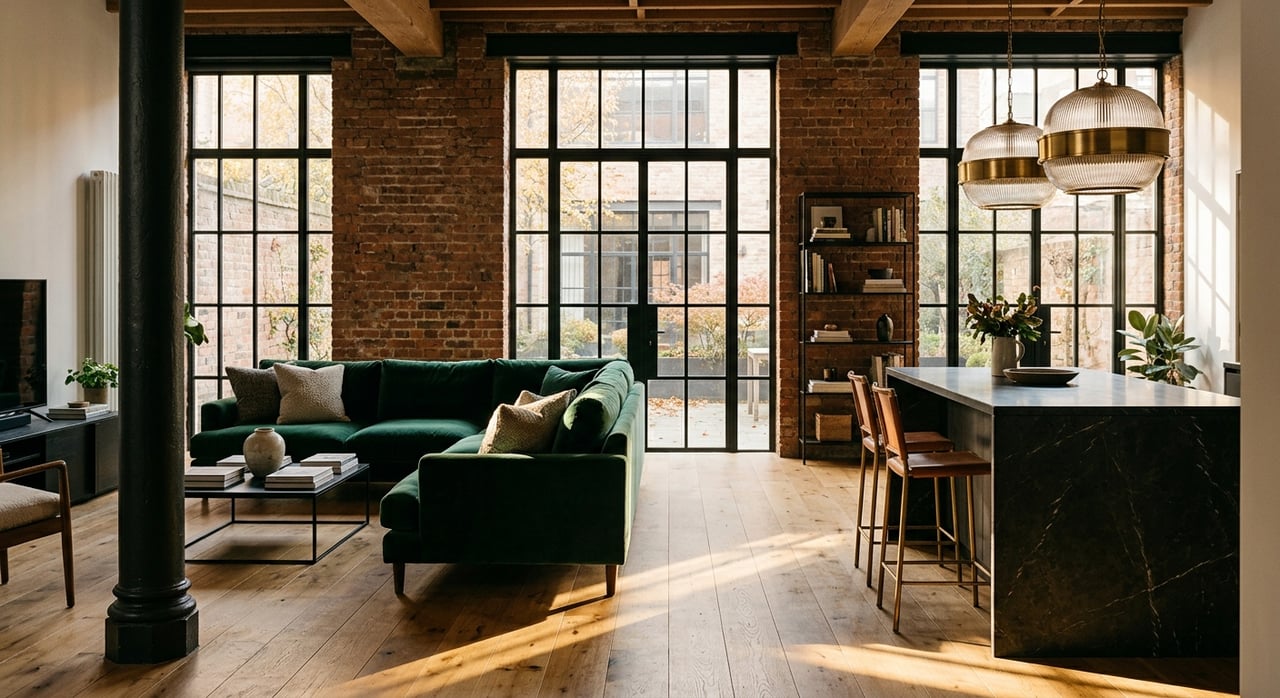
When buyers talk about Tribeca loft appeal, they are usually responding to a few recurring architectural traits. These qualities come directly from the neighborhood’s original store-and-loft buildings.
Tribeca’s early commercial buildings were meant to hold goods, showrooms, offices, and light manufacturing. That led to floorplates that were typically more open and flexible than a traditional townhouse or row-house layout.
In condo form, that often translates into expansive living and dining areas, fewer awkward pinch points, and a plan that can support different ways of living. A well-conceived loft condo tends to feel adaptable rather than overly programmed.
Cast iron played a major role in Tribeca’s streetscape and interior experience. It became popular in part because it was economical, durable, easy to assemble, and able to support larger areas of glass and broader window openings.
That helps explain one of Tribeca’s most recognizable features today: wide, shallow window bands that bring in more natural light. For many buyers, this is one of the clearest differences between a true loft conversion and a newer apartment that imitates loft style without the same window depth or rhythm.
The best loft condos preserve a sense of volume. That does not just mean high ceilings. It also means the feeling of visual depth from the windows inward, and the ability to experience the home as a continuous, breathable space.
A 2021 peer-reviewed study of Manhattan loft buildings found that building-scale factors such as facades, cores, corridors, and access to light and air materially affect long-term flexibility and usefulness. In simple terms, layouts that preserve exposure and avoid wasted circulation tend to age better.
Not every condo in Tribeca captures its loft heritage equally well. Some preserve the original building DNA, while others dilute it with deep hallways, overbuilt partitions, or layouts that push too much living space away from the perimeter.
That is why two homes with similar square footage can feel very different in person. The more defensible units are often the ones that keep the best parts of the old commercial shell intact.
Research on historic-district pricing is mixed, so it is wise not to assume automatic value increases simply because a property is in a landmarked area. But Tribeca does benefit from a scarcity story that buyers understand instinctively.
Authentic loft volume, preserved facades, and a low-supply historic district are hard to replace with ordinary condo stock. That scarcity helps support buyer attention, especially when a unit’s appeal is tied to original architectural character rather than finishes that could be duplicated elsewhere.
Finishes can be updated. Floor plan quality is much harder to change, especially in landmarked or conversion buildings.
For that reason, many buyers place lasting value on homes that preserve broad window walls, open living zones, and efficient circulation. A condo that respects the original envelope often feels more compelling over time than one that leans heavily on cosmetic upgrades.
If you are considering a Tribeca condo, it helps to look beyond design trends and focus on the underlying building logic. The goal is not just to buy square footage. It is to understand how well the home carries forward the qualities that made loft living desirable in the first place.
Start with the building’s status. Is it a standard condo conversion, or does it also sit within a historic district or a Loft Board framework?
New York City’s Loft Board explains that buildings meeting Loft Law criteria are interim multiple dwellings under its jurisdiction, and the Department of Buildings notes that the Loft Board was created in 1982 to regulate the conversion of certain commercial and manufacturing buildings to lawful residential use. If a property is within a historic district, exterior work and many alterations may also be reviewed against the designation record.
This does not make a building better or worse by itself. But it does affect what can be changed, how future work may be reviewed, and how tightly the original character is likely to be preserved.
A large number on a floor plan does not always mean better day-to-day function. Because Tribeca’s loft buildings were designed for commercial use, not modern bedroom-count logic, some homes handle space better than others.
The strongest plans usually keep light and views working at the perimeter while pushing support spaces toward the core. That preserves the broad, open quality buyers expect and reduces dead corridor space.
A great Tribeca condo should work for you today and remain adaptable later. That may mean room for a changing work-from-home setup, evolving household needs, or a different furnishing plan over time.
Loft buildings tend to perform best when they maintain efficient circulation, perimeter exposure, and a clear sense of volume. If a unit feels overly chopped up, it may have lost some of the very traits that justify its market appeal.
Today’s Tribeca buyer is often choosing between polished new construction and heritage-rich converted stock. New construction may offer consistency and convenience, but a well-preserved loft conversion can provide something harder to replicate: a direct relationship between structure, light, and open space.
That relationship began when the neighborhood served commerce, warehousing, and display. It survived the shift to residential living, and landmark regulation helped protect it. The result is that many of Tribeca’s strongest condos still feel grounded in the logic of the original building rather than in temporary design fashion.
For buyers, that can be a meaningful advantage. It gives you a better framework for deciding which homes merely look luxurious and which ones offer the kind of enduring architectural quality that tends to remain relevant.
If you are evaluating a historic conversion or boutique condo product in New York, working with an advisor who understands architecture, layout discipline, and conversion context can make your search more focused. For a private consultation, connect with Donald Brennan.
Stay up to date on the latest real estate trends.
October 22, 2026
October 15, 2026
October 8, 2026
October 1, 2026
September 24, 2026
September 17, 2026
September 10, 2026
September 3, 2026
August 27, 2026