The Lower East Side's Newest Restaurants Are Stacking Up, Not Spreading Out
September 3, 2026
September 3, 2026
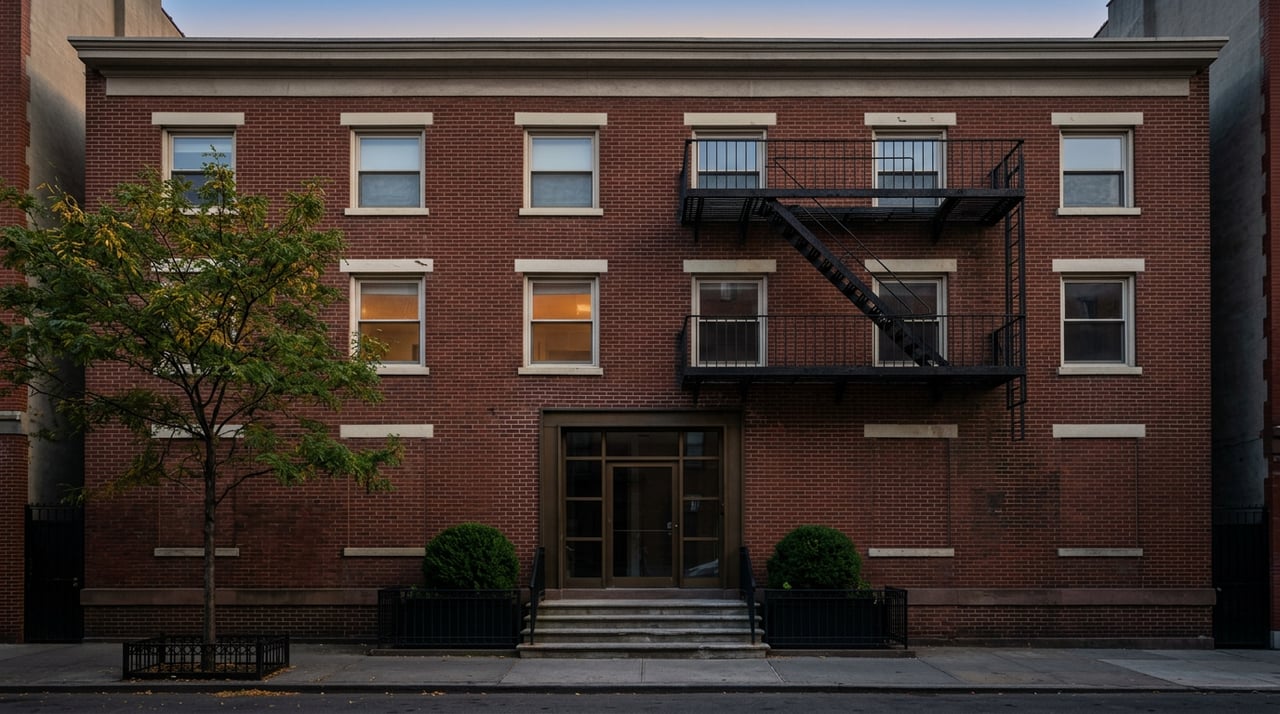
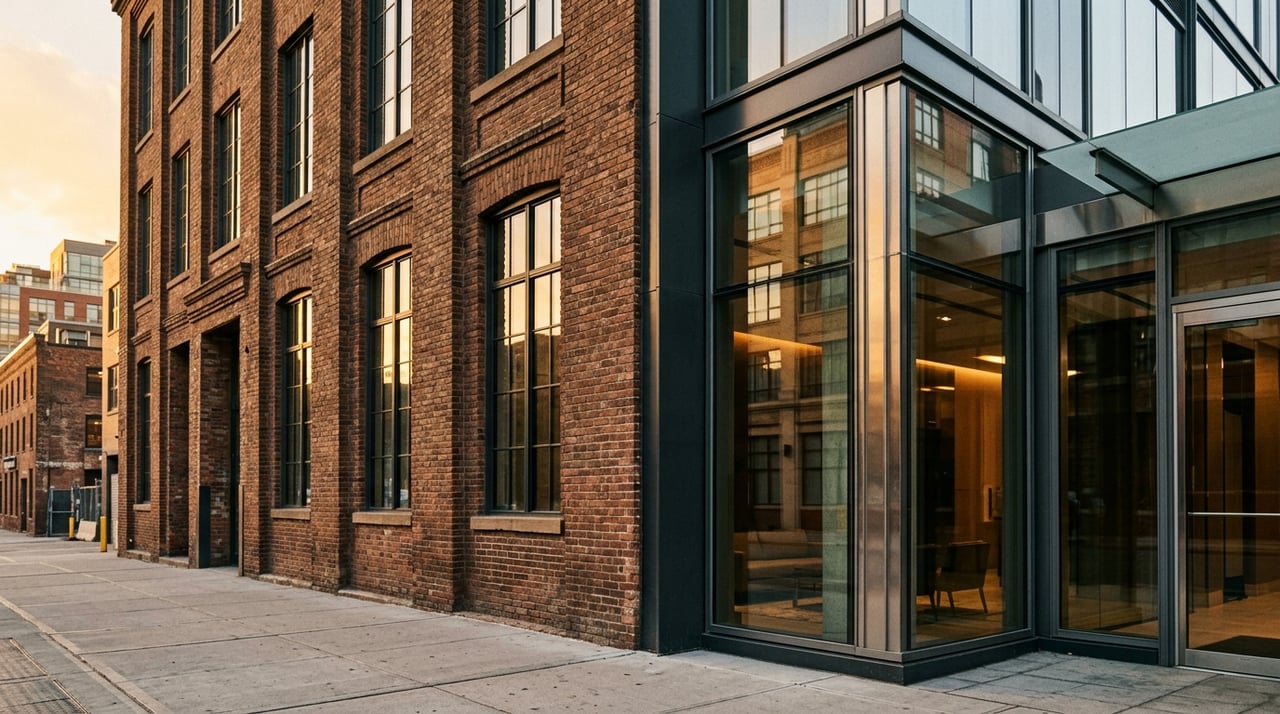
"The separation of space between the ground, lower and sub-lower levels will allow SH NY Hospitality to develop a restaurant, cocktail bar and private bar all at one location." That's how broker Jordan Cohen described the deal that brought Tin's into 109 Ludlow Street, a six-story building between Delancey and Rivington that its owner, Mordehy Haber, bought for $8.8 million back in April 2023. Three years and one lease later, that single address now runs a dumpling counter at street level, a cocktail lounge called the Dream Room built up above it, and a private bar tucked below. One door, three rooms, three different nights out depending on when you walk in.
If you've eaten your way through the blocks around Essex Street this year, you've probably noticed the pattern without naming it. The Lower East Side isn't just adding restaurants. It's building them in layers, inside buildings that were never designed to hold this many kitchens.
Tin's is the clearest example. SH NY Hospitality didn't take a single storefront and call it done. It carved a narrow building into a full night out: a ground-floor room built around sheng jian bao and a Shanghai-inflected menu, a moodier upstairs lounge for the after-dinner crowd, and a separate private bar for whoever booked ahead. Three distinct crowds can be in that building at the same hour and never cross paths.
That's a different instinct than the one-room, one-concept restaurant that used to define this stretch of Manhattan. It also explains something residents have probably felt without articulating: the energy on Ludlow Street shifts by the hour, not just by the day, because the building itself is doing three jobs at once.
Compare that to what happened at 137 Eldridge Street. Ha's Snack Bar built its reputation on a tiny, chalkboard-menu room that made a name for chef Ha Nguyen's French-Vietnamese cooking. Rather than knock down a wall or dig out a basement, the team opened a second, standalone restaurant, Bistrot Ha, right around the corner. Bigger, yes, with a full liquor license and a longer menu that runs from fried yuba with shrimp and sweet nuoc mam to curried lobster and sweetbread vol-au-vent to a whole steamed fluke with ginger and cilantro. But bigger by degrees, not by floors. More seats, real tables, the same intimacy stretched a little further, not stacked upward.
Two restaurant groups on two nearby blocks, solving the same problem, an address that can't fit everyone who wants in, in opposite ways. One went vertical inside a single lease. The other went sideways into a second address a few doors down.
Here's what else opened or reinvented itself within that same small radius this year:
| Restaurant | Address | What changed |
|---|---|---|
| Tin's | 109 Ludlow Street | New build-out across ground, upstairs, and basement levels of a six-story building |
| Bistrot Ha | 137 Eldridge Street | Second, larger restaurant from the Ha's Snack Bar team |
| Kisa | Lower East Side | Trading its Korean prix-fixe concept for a Southern country buffet |
| Xi Hu | Lower East Side | New arrival specializing in Jiangsu, Zhejiang, and Shanghai cooking |
| Edo Ya | Lower East Side | Father-and-son sushi counter, a la carte or ten-to-nineteen-course omakase |
Kisa's move is worth sitting with. This isn't a closure and a new tenant moving in. It's the same team deciding the concept itself needed to change, swapping a Korean tasting menu for a Southern country buffet built around the fried chicken and cornbread the owners grew up eating in Atlanta. That's a third way restaurants here are adapting: not by adding floors, not by adding addresses, but by rewriting the menu inside walls that already exist.
Set all of that against Essex Market, and the contrast gets sharper. The market opened in 1940 to move pushcart peddlers off Orchard and Hester streets and into one building, and it has spent the decades since doing the same unglamorous job: produce, olive oil, cheese, a place to sit down with a sandwich. Its current home is a newly renovated, 37,000-square-foot building, and this fall it's adding one more stall, El Sazon R.D., serving a Dominican smashburger alongside the market's existing mix of grocers and prepared food counters. That's the pace of change here. Not a new concept every quarter. One new vendor, added carefully, inside a building that has held its shape for generations.
The market also turned itself into a free public living room this summer, hosting free community viewings on World Cup 2026 match days from three to ten in the evening. The Lower East Side Partnership framed the moment simply: "the world is already here." Orchard Street backs that up on its own terms too, landing at number nine on a global ranking of the world's coolest streets. Between the market's viewing parties and that ranking, the neighborhood's international character isn't a marketing line. It's the actual crowd at Essex and Delancey on a Saturday afternoon.
None of this is really about the restaurants individually. It's about what the pattern tells you regarding how this neighborhood works right now. The narrow building stock on Ludlow and Eldridge doesn't leave room to expand outward, so ambitious restaurant groups are solving the space problem by going vertical inside a single lease, horizontal into a second address, or by simply gutting and rewriting what's already there. Essex Market sits outside that churn entirely, absorbing new vendors slowly while the streets around it keep reinventing themselves block by block.
If you're deciding where to eat on a night you didn't plan two weeks in advance, that's useful information. Essex Market takes walk-ins, always has. Bistrot Ha releases its reservations six days out at midnight and books up within minutes. Tin's, with three separate rooms under one roof, might have a seat at the bar even when the dining room is full. Knowing which kind of building you're walking into, one door with three clocks, one address with a twin down the block, or one market that hasn't changed its rhythm since 1940, tells you more about your odds of getting a table than any single restaurant's reputation does.
It also says something about how this stretch of the Lower East Side keeps its character while everything inside it turns over. The buildings are the constant. What happens inside them is the experiment.
For owners and small developers working with narrow, multi-level buildings like these, the same logic that's reshaping restaurant real estate on Ludlow and Eldridge applies to residential and mixed-use conversions across brownstone Brooklyn and lower Manhattan. Understanding what a narrow, multi-level building can actually hold, and how to sequence that use without losing what made the address worth having in the first place, is the kind of technical read that shapes a project's value long before it shapes its menu. If you're weighing a similar move with a property of your own, Brennan Global Properties is glad to talk through it. Schedule a private consultation.
Stay up to date on the latest real estate trends.
September 3, 2026
August 27, 2026
August 20, 2026
August 13, 2026
August 13, 2026
August 6, 2026
July 23, 2026
July 16, 2026
July 9, 2026