Positioning A Midtown West Condo For Global Buyers
July 2, 2026
July 2, 2026
If your Midtown West condo is going to compete for attention, it has to make sense fast. Buyers in Hell’s Kitchen often compare many listings at once, and international buyers may decide whether to take the next step based on what they can understand online before they ever visit in person. That is why positioning matters as much as exposure. In this guide, you’ll see how to present a condo in Midtown West for a global audience with more clarity, stronger storytelling, and smarter timing. Let’s dive in.
Midtown West, often described alongside Hell’s Kitchen or Clinton, offers a mix that many urban buyers understand right away. Newer towers sit near older walk-ups, and the area connects easily to Midtown business districts, the Theater District, and the west side waterfront. That blend creates broad appeal for buyers looking at New York as a lifestyle purchase, a second home, or an investment.
Pricing also helps explain why this area deserves careful positioning. StreetEasy places Midtown West at a median of $1.208 million across 413 listings and $1,497 per square foot, while new developments are closer to $2.118 million and $2,083 per square foot. Within the broader area, Hell’s Kitchen averages $1,388 per square foot, compared with $1,973 in Hudson Yards, $2,129 in Chelsea, and $3,318 in Midtown.
Those numbers show an important truth for sellers. Value can shift quickly by block, building type, and product category. If your condo is going to stand out, the marketing has to explain exactly what kind of opportunity a buyer is looking at.
Global buyers are a realistic audience for Midtown West condos, not a niche afterthought. In the 12 months ending March 2025, foreign buyers spent $42 billion on U.S. residential real estate, and 50% of those purchases were all-cash. Many of those buyers also favor condominiums in central cities and urban areas over suburban homes.
That pattern aligns well with Hell’s Kitchen. The neighborhood is compact, highly walkable, and full of service-rich housing options that are easy to understand for someone focused on location, convenience, and flexible use. NAR also reports that 45% of foreign buyers purchased for vacation home, rental, or combined use, which means a Midtown West condo often fits the way these buyers think.
Just as important, international buyers often do not complete a purchase because they do not find the right property, the cost does not line up, or financing becomes a hurdle. That makes clarity essential. The easier your listing is to understand, the easier it is for a serious buyer to stay engaged.
In a market with multiple listings and mixed inventory, your online presentation often does most of the selling before a showing is ever scheduled. Redfin reports 233 condos for sale in Hell’s Kitchen at a median listing price of $1.2 million and about 72 days on market. Realtor.com reports a $1.249 million median listing price, 352 active listings, a 98% sale-to-list ratio, and a median 44 days on market in May 2026.
Even though the exact figures vary by source and method, the signal is the same. Buyers have choices, and they move quickly through options online. Your condo needs to answer key questions immediately, especially for buyers who may be comparing from another city or another country.
A strong listing package should not just look polished. It should reduce uncertainty. Buyers want to know how the apartment lives, how large it feels, what the layout offers, and what the building adds to daily life.
NAR’s 2025 buyer trends report shows how important this is. Eighty-three percent of buyers rated photos as very useful, 57% said floor plans were very useful, 41% said virtual tours were very useful, and 35% valued neighborhood information. NAR also notes that 52% of buyers found the home they purchased online.
That means your first impression needs to do more than attract attention. It needs to explain the property clearly.
The first photo should communicate the condo’s strongest daily-use value. That might be the living room with light and views, an open kitchen and entertaining space, or a terrace that extends the apartment visually. The point is to lead with the image that makes the home feel both memorable and easy to understand.
Photo order matters too. A global buyer scrolling on a phone should quickly grasp the sequence of spaces and the overall quality of the apartment. If the images feel confusing, the listing can lose momentum before the buyer reads the description.
In Midtown West, floor plans are not optional. The neighborhood includes new towers, conversions, and older buildings that can photograph similarly while living very differently. A buyer needs to understand room dimensions, circulation, closet space, and view orientation without guessing.
This is especially important when your audience may not be able to visit immediately. A clear floor plan helps the buyer assess whether the home fits their needs before they commit time to a showing or a video tour. It also helps justify pricing by showing how the layout compares with competing inventory.
Your listing description should answer likely buyer questions right away. Instead of relying on broad adjectives, explain what the home offers in practical terms. Buyers respond better when they can picture how the apartment functions day to day.
That means describing features such as light, exposure, outdoor space, storage, and amenities in plain language. If the condo has a roof deck, gym, concierge or doorman service, package room, terrace, or notable views, explain what that means in daily use rather than simply listing the feature.
Staging still matters, especially in a condo market where the first showing often happens on a phone. NAR’s 2025 staging report says 83% of buyers’ agents found staging makes it easier for buyers to visualize a property as a future home. It also identifies the living room, primary bedroom, and kitchen as the most important rooms to stage.
For Midtown West, that guidance is especially useful. Many apartments compete on efficiency, finish level, and how spacious they feel relative to their footprint. Good staging helps define zones, improve scale perception, and make the apartment feel calm and usable.
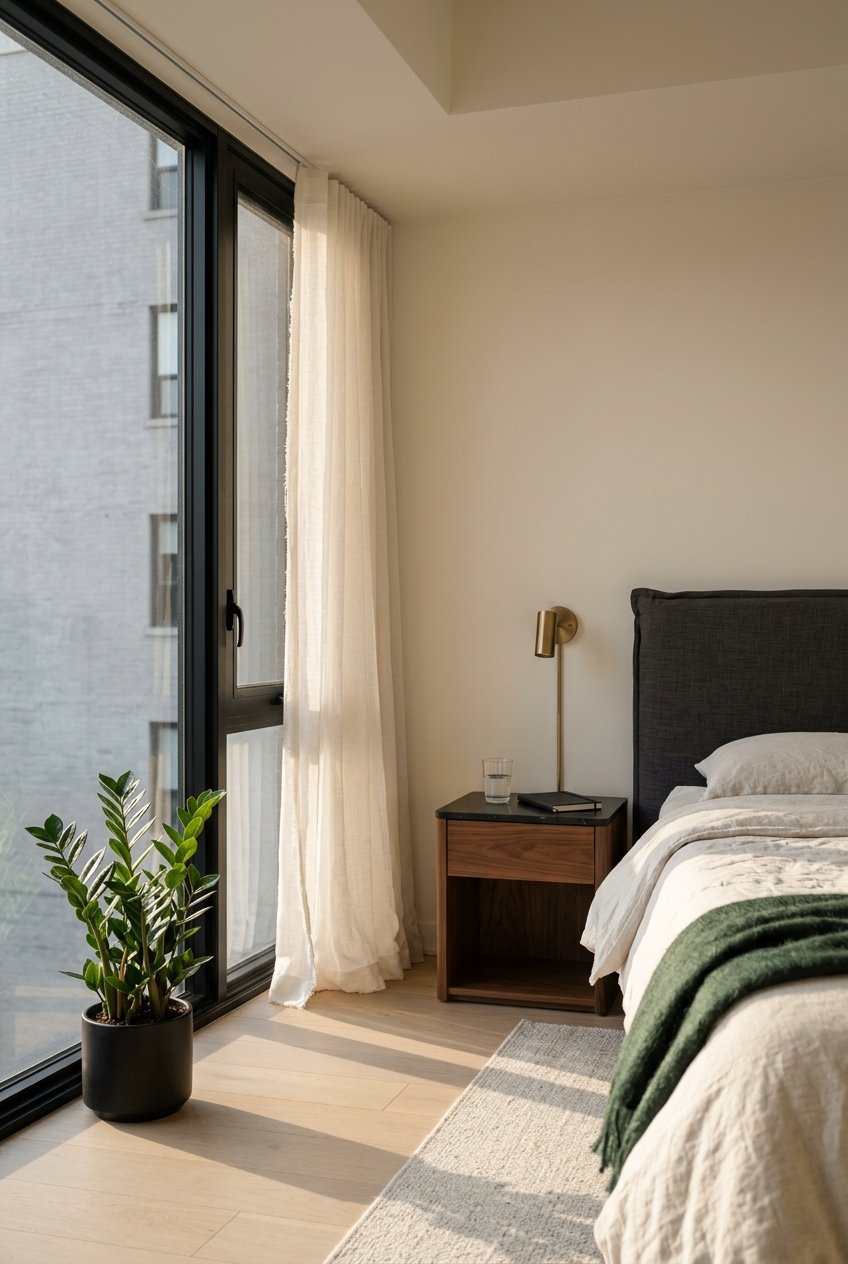
This is where a measured, design-aware approach can help. A condo should feel edited, architectural, and easy to read in photos. Clean lines, strong lighting, and restrained styling usually communicate value better than crowded rooms or overly personalized decor.
Global buyers are not only buying the unit. They are also buying into a building and a way of living. In Midtown West, that building story can be a major differentiator because inventory ranges from older resales to luxury new development.
If your building offers services or amenities, explain them with precision. Buyers want to know what they actually gain from a concierge, package room, roof deck, gym, or terrace. They also want to understand how those features support a second-home lifestyle, a pied-a-terre pattern, or long stretches away from the city.
Clarity is more persuasive than hype. The more easily a buyer can imagine daily life in the building, the more credible the listing becomes.
Midtown West is not a one-number market. StreetEasy’s data show meaningful variation across nearby areas and between resale and new-development product. That means pricing cannot rely on neighborhood averages alone.
Your condo needs to be positioned against the right competitive set. A seller should think in terms of building type, finish level, layout quality, amenities, and exact location, not just ZIP code or broad neighborhood label. In a market where buyers may compare Hell’s Kitchen with Hudson Yards, Chelsea, or Midtown in a single search session, pricing discipline helps the listing feel credible from the start.
Broader exposure matters when your buyer pool may extend beyond New York. NAR’s guidance supports the idea that international marketing can help a property stand out when the goal is to reach well-funded buyers. For a Midtown West condo, that can be especially relevant given the neighborhood’s urban format and international familiarity.
At the same time, exposure should be framed correctly. Global distribution is an access advantage, not a guarantee. What matters most is pairing broad reach with a listing package that is detailed, coherent, and ready to travel across channels.
For a brand like Brennan Global Properties, that matters because the firm operates within the Engel & Völkers network, which includes more than 1,100 locations worldwide. For a seller, that kind of international distribution can expand visibility beyond local traffic while still keeping the presentation curated and strategic.
Timing is part of positioning. In a neighborhood shaped by tourism, business travel, entertainment, and major events, launch timing can affect both visibility and logistics. A listing should come to market when photography, floor plan, video, copy, and distribution are fully ready.
The first 72 hours matter most. NAR’s visibility guidance notes the importance of early online momentum, and that is especially true in a market where buyers compare options quickly. If the listing goes live before all materials are polished, you risk wasting the period when attention is highest.
Neighborhood activity can also influence planning. Hudson River Park draws more than 17 million visits each year and hosts seasonal programming, including a 2026 World Cup watch-party series at Market 57 and the Intrepid Museum. Nearby, the Javits Center calendar includes BookCon on April 18 and 19, 2026, and New York Comic Con on October 8 through 11, while Kids’ Night on Broadway returns on February 24, 2026.
These events can support an energetic neighborhood narrative, but they can also affect traffic, access, and showing flow. A deliberate launch plan helps you use neighborhood energy without letting logistics work against the sale.
When a global buyer views your listing, they are usually trying to answer a short list of questions. How does the apartment live. What are the dimensions. Which way does it face. What do the amenities actually feel like in practice. How does the building fit second-home or rental-use goals.
The best marketing does not leave those questions for later. It addresses them upfront with strong visuals, accurate layout information, practical copy, and disciplined pricing. In Midtown West, that kind of clarity is often what separates a listing that gets saved from one that gets skipped.
If you are selling a condo in Hell’s Kitchen or Midtown West, the goal is not just to be seen. The goal is to be understood quickly by the right buyer, wherever that buyer begins the search.
If you want a more strategic, design-aware approach to positioning a New York property for sophisticated local and international audiences, schedule a private consultation with Donald Brennan.
Stay up to date on the latest real estate trends.
October 15, 2026
October 8, 2026
October 1, 2026
September 24, 2026
September 17, 2026
September 10, 2026
September 3, 2026
August 27, 2026
August 20, 2026